
Catholic School Principal James Sayer ’09 on Why He’s a REACH Nominator
As a Catholic school principal in East Harlem, James Sayer ’09 has nominated dozens of students to the REACH Program. Here, he reflects on how the program transforms lives.
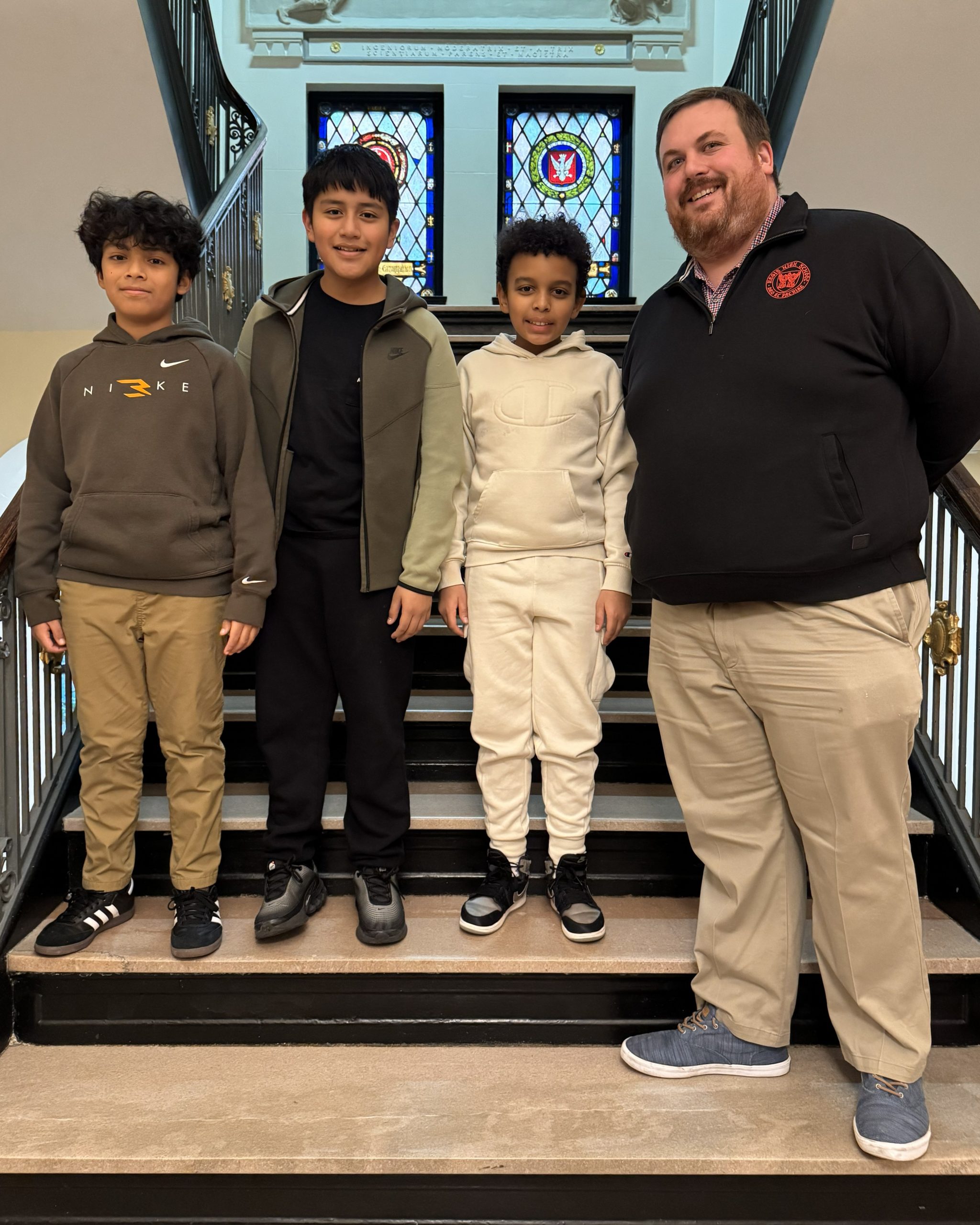
Our Lady Queen of Angels in East Harlem, where I’m blessed to serve as principal, is a remarkable institution with a diverse student body. As the last Archdiocesan school in East Harlem, we serve the children of the lowest-income neighborhood in Manhattan, with a large number of students coming from immigrant families. Our school is such a shining example of all the good work done in Catholic schools that Pope Francis chose to visit our building during his time in New York in 2015.
As an educator and Regis alumnus, I have seen firsthand that there is no surer way to positively impact a young man’s life trajectory than through the REACH Program. It’s why, in my 13 years working in both Catholic and public schools, I’ve nominated 28 outstanding students for the program. I’m proud that six of these students ultimately enrolled in REACH, including four current students.
Nominating students to REACH is a natural extension of the work we do at OLQA. As the educational landscape has grown more challenging in almost every way since COVID, REACH truly stands apart, putting its students not just on a path to high school and college but to being a genuine force for good in their community.
It is so clear to me how the REACH Program builds so effectively upon the mission of Regis by transforming the lives of its students. And the impact of REACH on our boys from OLQA has indeed been transformative. On the most basic level, our REACH students are prepared to gain admission to and win scholarships from outstanding schools like Regis, Fordham Prep, Xavier, Cristo Rey New York, Loyola, and St. Peter’s Prep. Seeing boys thrive at elite schools has sparked a drive for high school access that has helped OLQA graduates earn more than $1 million in scholarships and financial aid to high school in the past three years.
I also see the ways that their experience at REACH shapes their character. REACH graduates often talk about how the program helps them develop independence: They study on their own, they read on their own, they take care of themselves, and they are less distracted by their phones. It’s remarkable to watch these boys evolve into young men. Fifth-graders who are studious and diligent but rather quiet gain a new level of confidence and self reliance. Parents routinely mention how they see their sons become more responsible, doing chores and homework on their own without so much as a reminder. Students’ experience at REACH, and especially their time on campuses at Fordham University and the University of Scranton, imprints habits for success that stick with them for the rest of their lives.
REACH encourages its students to be open to growth, and it’s true that the boys’ academic performance can improve dramatically from the 6th grade through the 8th grade. But students’ growth transcends grades. The boys have the courage to be uncomfortable and try new things. I spoke recently to two alumni of OLQA and REACH who are in their junior year at Xavier, and they talked about taking risks to push themselves, from joining sports teams and robotics clubs to diving into music electives. The growth mindset the boys develop is powerful.
REACH also connects students with their faith on a deeper level and encourages them to make the world around them a better place. Our REACH students actively participate in our school liturgies as readers and servers, and they are always the first ones to volunteer for just about anything.
REACH creates a community that truly supports the boys on the difficult path from a grammar school serving lowincome students to elite high schools and colleges. Each year when our students return from the REACH summer sessions, I hear them talk about the positive impact of the REACH teachers and administrators. But perhaps more importantly, I’ve seen how REACH students develop a camaraderie with their peers that will last a lifetime. As a member of the Regis Class of 2009, my year was the first class to have REACH graduates. I have been a witness to how their bonds have evolved into adulthood, from reunions and JUG Nights to Regis Alumni Basketball League games. I’ve also spoken often with my classmate Mr. Russell Quiñones ’09, the Director of REACH, about how the program shapes the lives of its students well beyond the 8th grade. Ultimately, as an educator, I make a point to nominate my students for REACH so they might have this same brotherhood as they navigate through life.
The young men who attend REACH form a community of students who look out for each other as they grow together. In the mission-driven work of Catholic education, there is no better partner than the REACH Program.
This article appears in the Winter 2026 issue of Regis Magazine.
Read more Regis news