
Five Questions for Ned Hanlon ’02, Metropolitan Opera Chorister
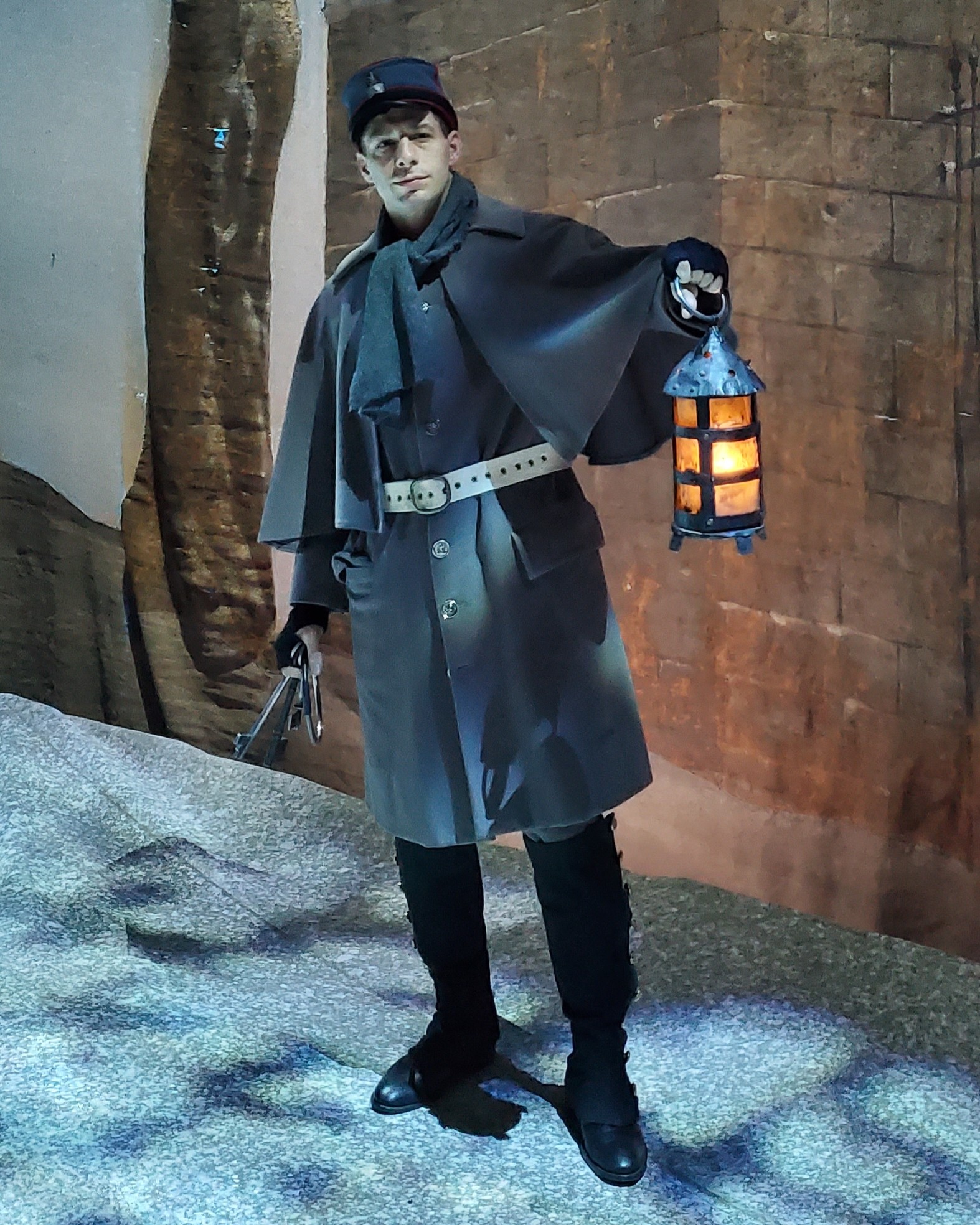
The Metropolitan Opera chorister and president of the American Guild of Musical Artists on his career and the importance of offering robust arts programming to high school students.
Did you know in high school that you wanted to pursue a career in the performing arts?
When I was at Regis, I did plays and musicals with the Regis Repertory, and I also did a couple shows at Sacred Heart. I sang in the Regis jazz choir and sang at Masses with Schola. At the time, it was an extracurricular. There was no way I thought I was going to be anything but a lawyer. Both my parents are lawyers. But when I was applying to colleges, I applied to ones that had both a music program and a liberal arts program. I enjoyed performing, and I thought that it could get me into a better school.
I really wanted to go to McGill, which didn’t have a music theater program but did have a classical music program where I could study vocal performance. I had a lot of catching up to do; I didn’t even know how to read music. But it was life altering. I’d never seen an opera until I started going there, and suddenly I was in one. During our reading week in February of my freshman year, I came back to New York and was like, If I'm going to keep studying this, I probably should see an opera. And so on back-to-back nights, I saw a couple operas at the Met, and it was like, Okay, I really like this. I'm going to keep this up.
What did your path to the Met look like?
In the opera world, we have these summer apprentice training programs, which you generally do in your early years. While I was at McGill, I did one up in upstate New York and met a voice teacher who I really clicked with. He was a professor at University of Michigan, and so basically I followed him out to Michigan after my undergrad and earned a master's of music and voice performance and a specialist degree in vocal performance.
By that point, I was set on what I wanted to be doing, and I moved to Chicago and started working as a young opera singer, having something of a Midwestern career, working a lot in Chicago, Ohio, Iowa, that kind of circuit. It was working, but it wasn’t easy piecing together work. Then in 2014, I was in New York for a workshop of a new musical at the Lincoln Center Theater, and on the first day of that workshop, they had auditions for the Met Opera chorus.
Being a professional chorister was not really what I thought I wanted to do, but since I was here, I was like, Well, why not? Let's do it. So I auditioned for them, and a few months later, they offered me a job in the full-time chorus, which is very much a full-time job. I do 160 to 180 performances a year. More than 1,600 performances later, I'm still here.
With so many performances under your belt, what’s been your favorite opera to perform?
The one that I have the most affection for, and the one that in some ways feels the most meaningful, is La Bohème, because it was the first opera I ever saw at the Met. It's a classic Metropolitan Opera production, and now for the past six years or so, I've gotten to do one of the solos in it. So that's really special.
I also like to do ones that really push me and that take me out of the everydayness of singing, which is an insane thing — the everyday-ness of singing on the Met stage. But it’s true. These tend to be the operas that are the hardest. There's an opera called Lady Macbeth of Mtsensk by Shostakovich, and it’s about as much fun as you can possibly have on the stage. It’s insane and crazy and amazing.
We did an opera called Akhnaten by Philip Glass, and it was as challenging as anything I've ever had to learn in my life musically, but it was such a special piece. And then we opened this season with an opera called The Amazing Adventures of Kavalier & Clay, which is a new piece. I get to really be an interesting character in it, so that was a special experience, as well.
How’d you get involved with the union?
I joined the union in 2009, but I was not terribly involved for a while. Then I got into the chorus at the Met, which is by far the largest opera company in the United States and has a really strong union presence. In 2017, we were headed into a collective bargaining agreement negotiation, and eight months out, the chair of our negotiating committee resigned from his position. There wasn't a lot of interest from people in the chorus, and I thought, Well, both my parents are lawyers, and I think the idea of doing this sounds kind of interesting. It was hard work, but it taught me so much.
We had another negotiation coming up in 2021, but obviously before we hit that, the pandemic happened, and the Met went dark for a year and a half. I was still in this position while I was working my way through dealing with cancellation and trying to figure out how to support the artists. During that time, it was impossible not to think about the larger performing arts world.
I started becoming much more interested in national union work. The American Guild of Musical Artists represents singers, dancers, stage managers, stage directors, choreographers, and actors in opera, ballet and concert work. And all these folks were going through different versions of the same thing. I ran for a board seat for the union, and I got in and joined the executive council. Then two years later, the incumbent president wasn’t running again, so I ran and became president of the union. It’s so rewarding to work with my fellow artists to make real change in this industry.
Why is it so important for high school students to have opportunities to show off their creative sides?
Some people are going to be like me and not realize that this is something they want to do. If I hadn't had the opportunity to do musical theater in high school, I would not be doing what I am doing now. And I find what I'm doing now to be deeply fulfilling. Giving high school students exposure to the arts and as wide a variety of things as possible opens their horizons in really important ways. There’s real value in being exposed to the arts when you’re younger and being involved in the arts when you're younger, because the arts are very important.
This article appears in the Winter 2026 issue of Regis Magazine.
Read more Regis news